
Project objective
The project is designed to contribute to inclusive and sustainable agro-industrial rice development in Sierra Leone. Its core aims are to reduce dependence on imported rice, strengthen food and nutrition security, create economic opportunities, increase farmer income and build climate resilience.
SLERAZ uses a value-chain approach. Instead of supporting production alone, it links farm infrastructure and services to aggregation, logistics, processing, finance and market access.
Farmers need reliable production conditions, but they also need somewhere to dry, store and sell paddy. Processors need enough paddy of consistent quality. Buyers need reliable supply. The project is structured around these connections.
Component 1 — climate-resilient production systems
This is the largest technical component. It includes land and water development, climate-resilient inputs, mechanisation services, extension, seed systems and farmer capacity support.
Irrigation
Rehabilitate or construct about 3,000 hectares of climate-resilient irrigation to improve water control and support more reliable cropping.
Rainfed land development
Develop an additional 10,000 hectares for rainfed production in target ecologies across the two districts.
Mechanisation
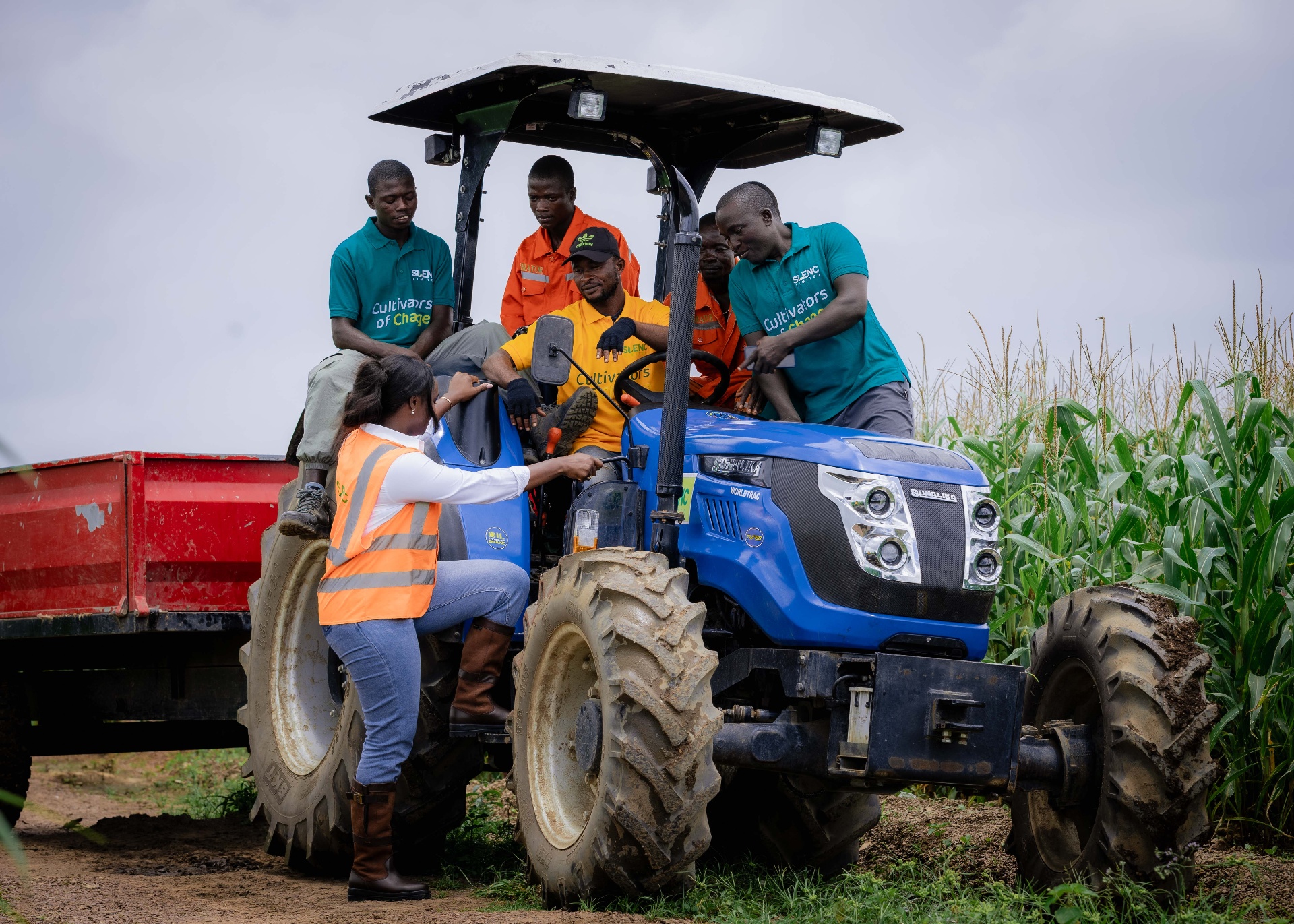
Support access to tractors, harvest equipment and service centres through service-provider models rather than treating machinery as an isolated intervention.
Seed and inputs
Strengthen the production and distribution of certified and climate-resilient rice seed and improve access to appropriate fertiliser and crop protection.


Component 2 — processing, markets and private sector
SLERAZ is designed to increase the value retained inside Sierra Leone by improving milling quality, post-harvest handling and commercial linkages. Three agro-industrial processing hubs are planned, alongside aggregation and transformation-centre functions.
The processing model includes modern integrated rice milling, quality management, packaging, storage and market development. Private operators are expected to play a role in operating or investing in facilities under public-private arrangements.
Women and youth
The project includes specific provisions for women and young people. These include support to women-led value-added activities, youth entrepreneurship and a youth incubation programme intended to train around 400 young students and graduates to support extension-service delivery.
Public infrastructure targets
| Area | Public target / function | Why it matters |
|---|---|---|
| Irrigation | About 3,000 ha | Improved water control and more reliable cropping. |
| Rainfed land development | About 10,000 ha | Expand productive area and make land more suitable for mechanised operations. |
| Farm access | About 120 km of tracks | Improve movement of inputs, machinery and harvested paddy. |
| Jetties | 8 targeted in the cost plan | Improve river access for isolated production communities. |
| Aggregation / transformation centres | 3 main platforms | Drying, cleaning, storage, bulking, services and market information. |
| Processing hubs | 3 planned hubs | Modern milling, quality control, packaging and private-sector value addition. |
Delivery model
The project management and monitoring arrangements are designed around a project management unit, government technical institutions, development-finance partners, private operators and local stakeholders. Monitoring is intended to track outputs and outcomes, with gender-disaggregated indicators and regular supervision.
Private-sector participation is built into several parts of the design, including commercial farming, mechanisation services, seed distribution, processing, finance and off-take. This is intended to support the long-term commercial use of project infrastructure after construction.
What this website publishes
This site publishes high-level project objectives, targets, financing, public safeguards, locations, participation opportunities and approved institutional information. It does not reproduce confidential procurement information, detailed staff remuneration, vendor-specific recommendations, personal data or information that could compromise competitive processes.